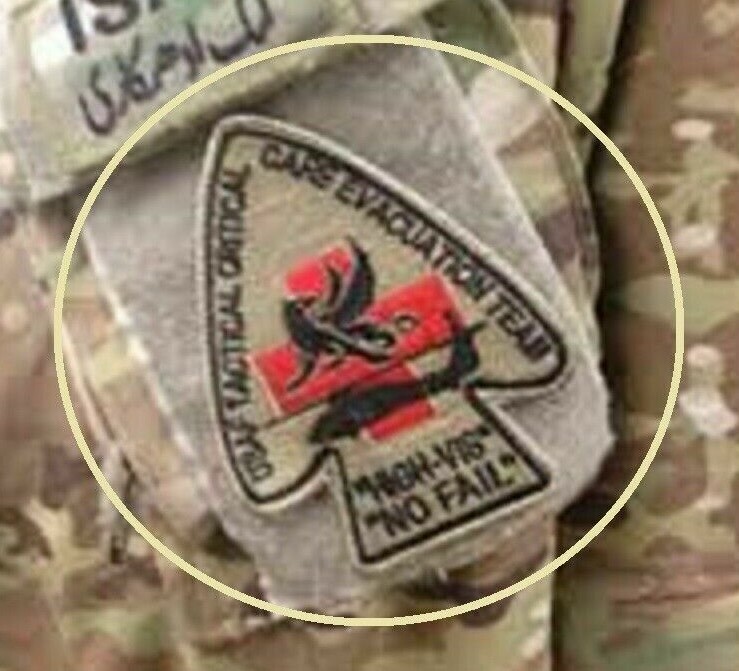
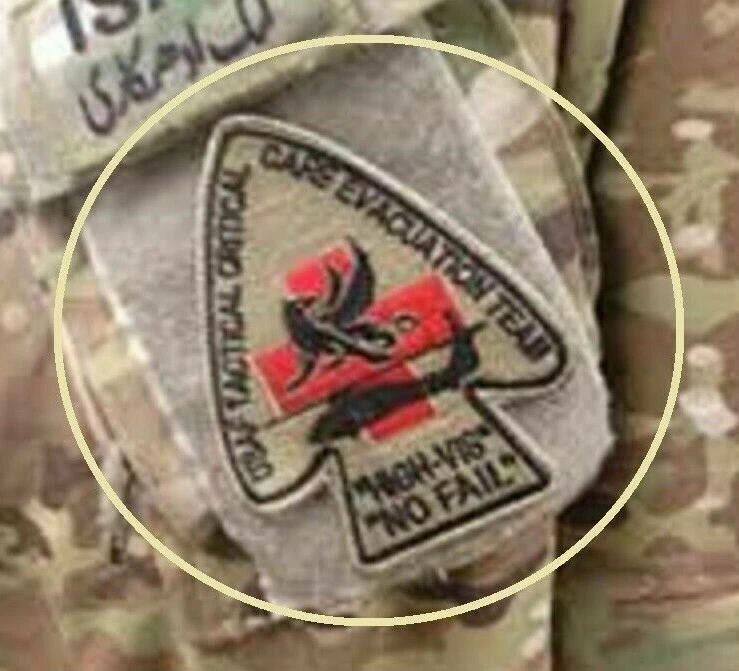
AFSOC Combat Casualty Response Special Tactics Critical Care INSIGNIA: HIGH-VIG
$ 10.56
Description
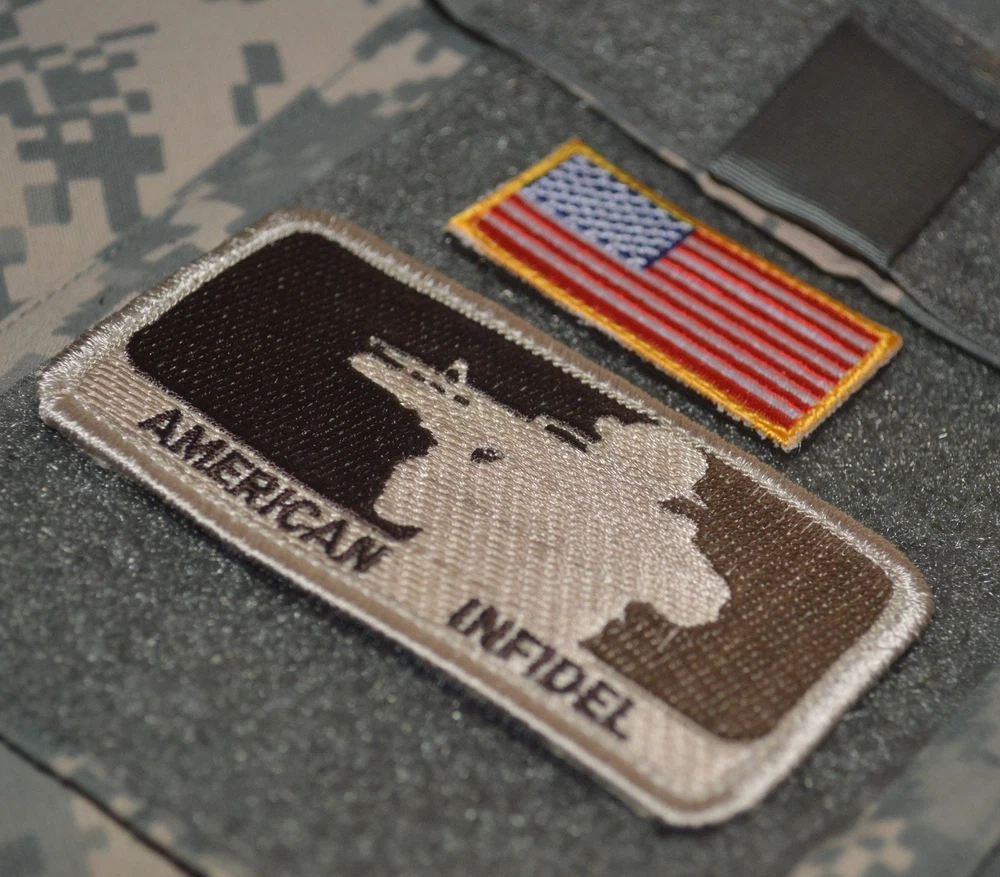
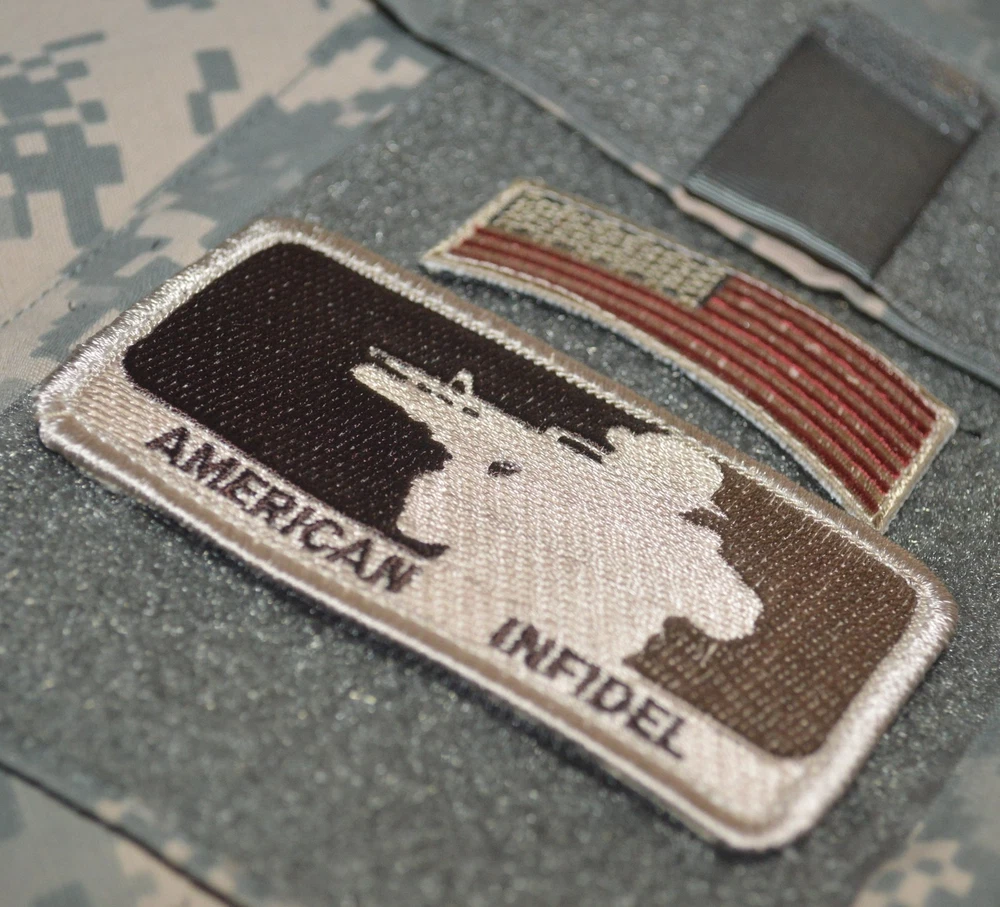
Combat Casualty Response Air Force Special Tactics Critical Care DD Insignia: HIGH-VIG This is an Original (not cheap import copy) ELITE SPECIAL WARFARE PROFESSIONAL Combat Casualty Response Air Force Special Tactics Critical Care DD Insignia: HIGH-VIG (velkrö). You will receive the item as shown in the first photo. QUIS ILLOS BELLATORES CUSTODIET (Those Who Care for the Warriors). Please note that there are color variations due to different settings on different PCs and different Monitors. The color shown on your screen may not be the true color. Tactical combat casualty care (TCCC) is the pre-hospital care rendered to a casualty in a tactical, combat environment. The principles of TCCC are fundamentally different from those of traditional civilian trauma care where most medical providers and medics train. These differences are based on both the unique patterns and types of wounds that are suffered in combat and the tactical conditions medical personnel face in combat. Unique combat wounds and tactical conditions make it difficult to determine which intervention to perform at what time. Besides addressing a casualty’s medical condition, responding medical personnel must also address the tactical situation faced while providing casualty care in combat. A medically correct intervention performed at the wrong time may lead to further casualties. Put another way, “good medicine may be bad tactics,” which can get the rescuer and casualty killed. To successfully navigate these issues, medical providers must have skills and training oriented to combat trauma care, as opposed to civilian trauma care. The hard lessons learned over centuries of battlefield healthcare were all but ignored until a landmark paper appeared in a 1996 issue of Military Medicine. Previously, military guidelines for trauma management mirrored tactics used in the civilian sector. Initiated by the elements of the Special Operations Command, the new strategies outlined in 1996 were collectively referred to as Tactical Combat Casualty Care (TCCC). TCCC launched a total reassessment of practices with one overarching goal:Decrease Preventable Combat Death at the point of wounding. These new strategies based on historical wounding patterns in combat also bear a particular relevance to the operators of Tactical Law Enforcement who share many operational parallels with their military counterparts. Instead of the civilian-based approaches of the past, integrated strategies specific to combat realities continue to emerge. Compared to standard pre-hospital treatment modalities, which are fundamentally based on blunt trauma, TCCC distinguishes itself from the norm by focusing primarily on the intrinsic tactical variables of penetrating trauma compounded by prolonged evacuation times. Today, TCCC is quickly becoming the standard of care for the tactical management of combat casualties within the Department of Defense and is the sole standard of care dually endorsed by both the American College of Surgeons and the National Association of EMT’s for casualty management in tactical environments. The U.S. military is enjoying the highest casualty survival rate in the history of modern warfare, but medical officials believe they can save even more lives by getting advanced care sooner to injured troops. For nearly a year, a three-member team of Air Force health professionals has successfully evacuated and treated 299 severely wounded troops by taking the emergency department to the injured, and another team is set to stand up in the coming month. Known as tactical critical care evacuation teams, or TCCET, the teams comprise an emergency medicine or critical care physician, a certified nurse anesthetist and an emergency department nurse or intensive care/critical care nurse. The teams specialize in moving and treating patients who have just been injured and risk dying if emergency treatment isn’t administered immediately. The first team’s skills are being put to good use quickly as troops continue the fight in Afghanistan, where the improvised explosive device remains the enemy weapon of choice. Many of the casualties of Operation Enduring Freedom suffer blast-related injuries such as burns, lung trauma, traumatic amputation, blunt force trauma and head injuries, according to Air Mobility Command surgeon Brig. Gen. (Dr.) Bart Iddins. AMC is the lead agency for military aeromedical evacuation around the world, and missions are typically flown by air mobility aircrews and medical teams on C-17, KC-135, or C-130 aircraft. More than 186,000 patient movements have been successfully completed since the onset of operations Iraqi Freedom, New Dawn and Enduring Freedom. Though every combat medic and many nonmedical combatants are trained to deliver tactical combat casualty care on the battlefield, Iddins said the injuries sometimes are so severe that they exceed those capabilities. Tactical combat casualty care has saved many lives, but is in no way definitive treatment, Iddins said. “The casualty must still be evacuated to a higher level of medical care.” "VIG" - the house edge - short for "vigorish" used in gambling;When wagering on a straight wager (point spread or total), you lay a certain amount of money to win a smaller amount of money. The difference between what is wagered and what is won is called the 'Juice' or 'VIG'. This 'Juice' or 'VIG' is one of the ways a sports book makes its money. In football and basketball the 'Juice' (or 'VIG') is 10%. In other words, for every $110 wagered you will win $100. If you lose the wager, you lose $110. If you win the wager, you get the $110 'Juice' refunded to you, plus the $100 in winnings ($110 + $100 = $210 total paid back to your account). Vigorish (also known as juice, under-juice, the cut, the take, the margin, the house edge or simply the vig) is the fee charged by a bookmaker (or bookie) for accepting a gambler's wager. In American English it can also refer to the interest owed a loanshark in consideration for credit. The term came to English usage via Yiddish slang (Yiddish: וויגריש, romanized: vigrish), which was itself a loanword from the original Russian. (Russian: вы́игрыш, romanized: výigryš, lit. 'gain, winnings') As a business practice it is an example of risk management; by doing so bookmakers can guarantee turning a profit regardless of the underlying event's outcome. As a rule, bookmakers do not want to have a financial interest creating a preference for one result over another in any given sporting event. This is accomplished by incentivizing their clientele to wager offsetting amounts on all potential outcomes of the event. The normal method by which this is achieved is by adjusting the payouts for each outcome (collectively called the line) as imbalances of total amounts wagered between them occur. Tactical Critical Care Evacuation Team (TCCET) 3-member team Modeled after UK MERT team given their documented success in far forward resuscitations ER Physician Anesthesia Provider Critical Care. Other items in other pictures are available from my eBay Store . They will make a great addition to your SSI Shoulder Sleeve Insignia collection. You find only US Made items here, with the same LIFETIME warranty. ** eBay REQUIRES ORDER BE SENT WITH TRACKING , PLEASE SELECT USPS 1ST CLASS SERVICE w/TRACKING ** ** eBay REQUIRES ORDER BE SENT WITH TRACKING , PLEASE SELECT USPS 1ST CLASS SERVICE w/TRACKING ** We'll cover your purchase price plus shipping. FREE 30-day No-Question return ALL US-MADE PATCHES HAVE LIFETIME WARRANTY We do not compete price with cheap import copies. Watch out for cheap import copies with cut-throat price; We beat cheap copies with Original design, US-Made Quality and customer services. Once a customer, a LIFETIME of services