

1920s Vintage Letterpress Block for Printing Coupon Booklets
$ 12.65
Description
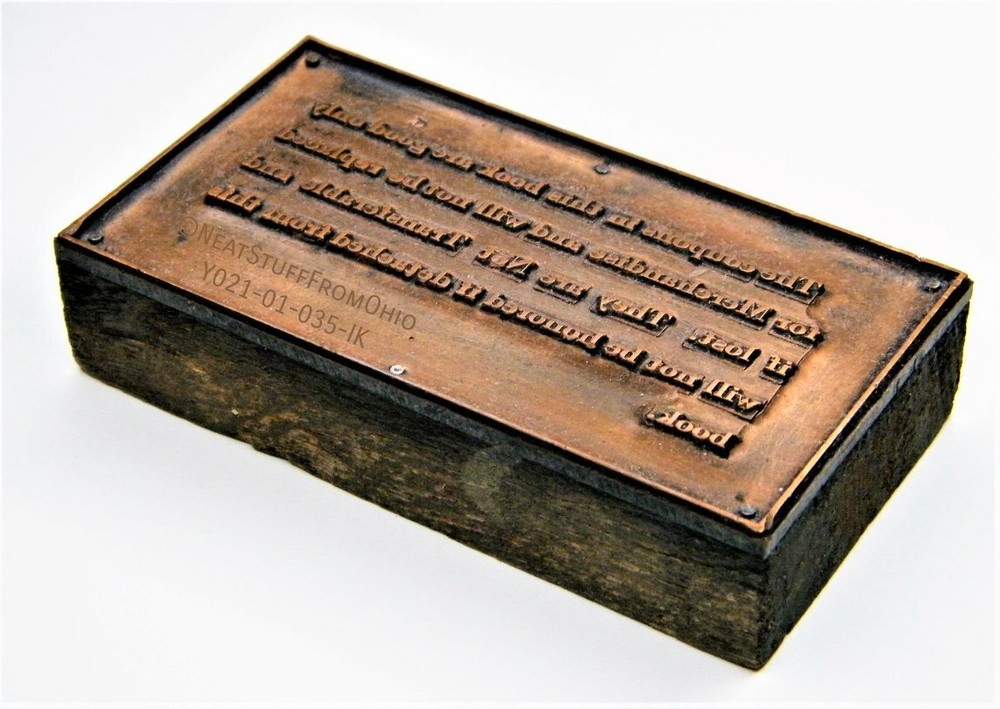
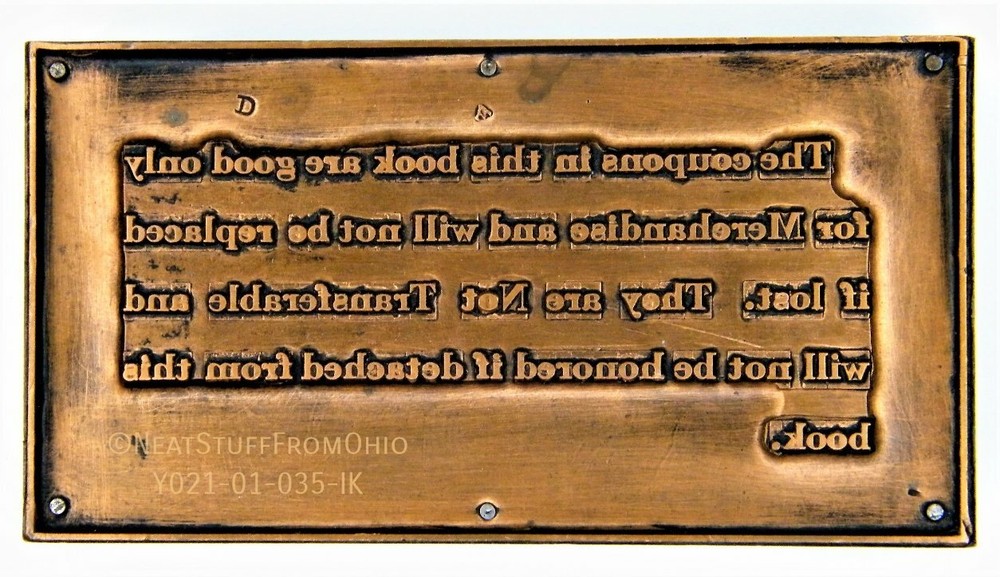
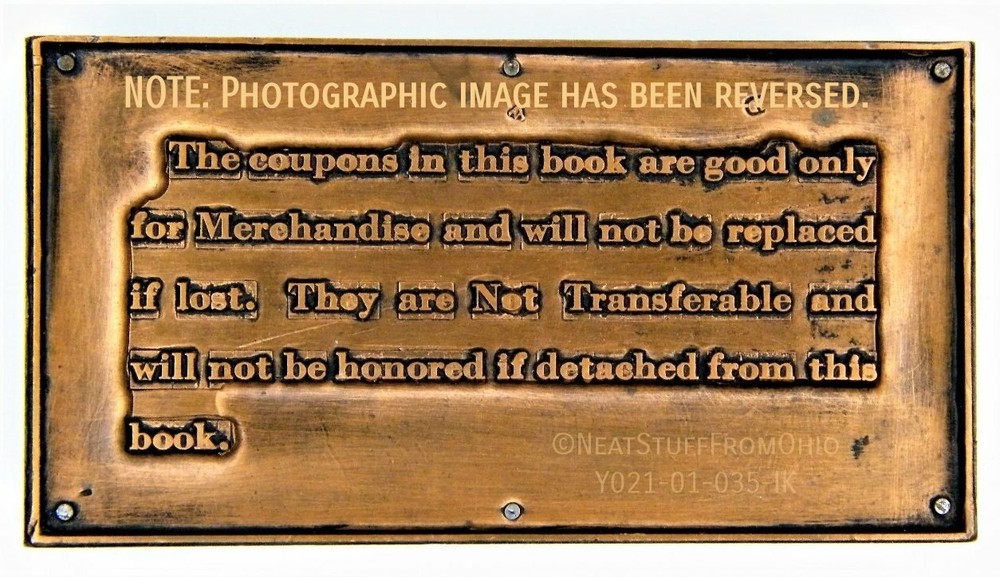
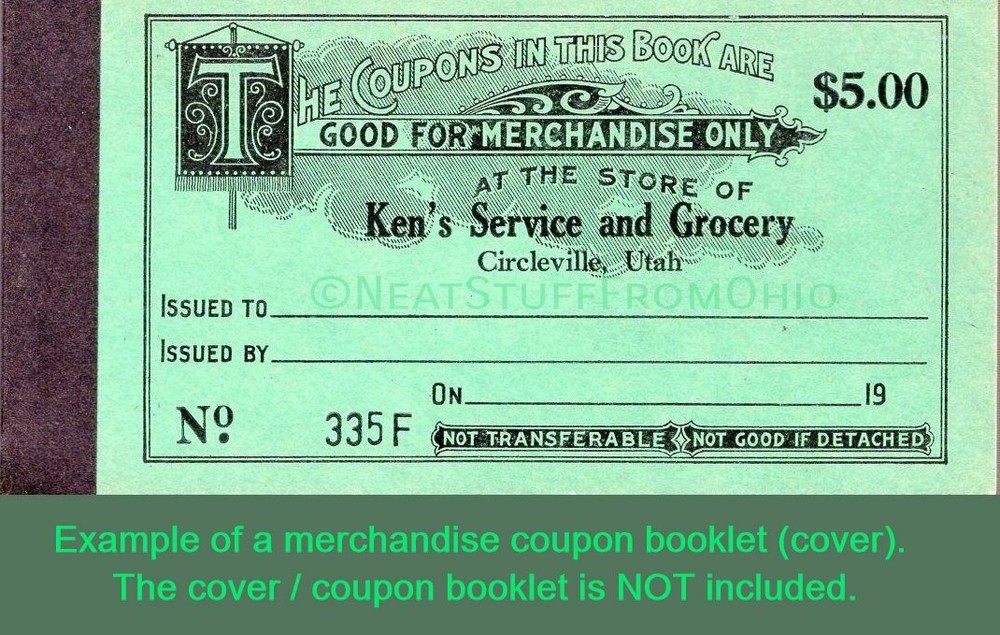
LETTERPRESS BLOCK FOR PRINTING MERCHANDISE COUPON BOOKLETS, VERY UNIQUE ITEM, 1920s NOTE꞉ If you want to purchase an extremely rare / unique piece of vintage American merchandising history, don't buy an image ripped out of some magazine or newspaper. Instead, buy the printing block that printed the actual image! QUANTITY꞉ ONE vintage letterpress block used for printing merchandise coupon booklets. This letterpress block would have printed the disclaimer on the first or second page of tens-of-thousands or merchandise coupon booklets. DIMENSIONS꞉ This wood and metal letterpress printing block measures 0.92" deep by 2.25" high by 4.225" wide and weighs 7.9 ounces (225 grams). Yes, this is a fairly large block weighing almost ½-pound and about the same size as a pack of cigarettes. This stamp is a professionally-made letterpress block used for printing. It shows some surface wear from being in the press. Based on the collection of coupon printing blocks we acquired, we believe this block was used by one of the largest coupon book printers in the United States: The Allison Coupon Company of Indianapolis, Indiana. CIRCA꞉ Estimated to be 1920s. ABOUT MERCHANDISE COUPON BOOKLETS꞉ Printed by the same companies that printed "ice coupon booklets" (purchased in advance to pay for block ice at some future time), "merchandise coupon booklets" were also paid for in advance but used to purchase a specific store's merchandise. Our research leads us to believe this method of payment started to be introduced around 1880, really gaining traction around 1900. There were a flurry of United States Patents for coupon booklets starting in the 1890s such as United States Patent Nos. 430,044 (June 10, 1890); 469,546 (February 23, 1892); 508,212 (November 7, 1893), 1,132,641 (March 23, 1915); et al. The tear-out coupons in merchandise booklets had assigned values, such as: 1¢, 5¢, 10¢ and 25¢ but were ONLY REDEEMABLE at a specific store or chain of stores. Although the booklets were marketed as a [quasi] loyalty program, the booklets were actually a time saver for merchants who had to maintain “their books” of customers who “bought on time (i.e. “credit / charged”). General stores and service stations in small towns (often mining towns or other “company towns”) would not accept cash for merchandise, instead requiring customers purchase merchandise coupon booklets and then redeem the coupons as they purchased merchandise or services. This afforded the business owner a number of benefits: 1. They had the customer's money in advance and could use it to purchase additional inventory. 2. It minimized employee pilferage at the register. 3. If a customer lost a booklet, the merchant could “monitor for” that customer's coupons being redeemed. 4. The coupons were only redeemable at one particular location - - thus the “loyalty aspect.” 5. They deterred competitors from “setting up shop” because residents were financially “invested” in the existing business. 6. Each booklet had its own serial number as did the coupons within. Because the merchant maintained a record of the booklets' serial numbers, the merchant knew who purchased every booklet (and how much debt was outstanding). In some situations, businesses would pay their employees and vendors (in part or whole) with coupons periodically resulting in legal problems for the company (see State of Missouri -vs- Missouri Tie & Timber Company, May 11, 1904). Missouri enacted a statute to stop the payment of wages with “merchandise coupons.” RARITY꞉ Extremely rare / unique. It is almost impossible today to locate an actual merchandise coupon booklet - - let alone any of the printing blocks use to print them! You are purchasing an American-made letterpress printing block for printing the disclaimer for this company's merchandise coupon booklets. In the late 1800's (and up through the mid-1900's) books, posters, tickets, forms, newspapers, and other types of printed paper were produced on a printing press. Movable type and wooden / metal printing blocks (also known as a letterpress cut or printing dies) were set in a frame (known as a chase) and ink was rolled over the surface of the metal image with a roller (also known as a brayer) before the paper was pressed into the inked surface. This process was known as relief printing which included woodcut, relief etching, linocut, linotype, and metal cut. CONDITION꞉ Used. COPPER ELECTROPLATING꞉ This particular letterpress block has a copper electroplated surface. Copper or zinc electroplating was added to the surface of letterpress plates to keep the images sharp -and- to increase the number of impressions a plate could produce before being "retired." If you would like to "shine up" the surface of the plate, we would suggest you use a little copper cleaner (or ketchup) on a toothbrush to bring out its brilliant copper color, remove tarnish and any some of the residual ink. NOTES ABOUT THE IMAGE SURFACE: Every time a die passes through the printing press, the pressure of the die imprinting on the paper subtly degrades the surface of the plate/die/block. Please see the photo if you have any questions regarding the suitability of this block if you actually intend to use it for printing. SHIPPING COST꞉ Your shipping cost is calculated when checking out. To keep your shipping cost as low as possible, it's based on weight, package size and destination (i.e. “DIM”). This item ships by USPS First Class or Priority Mail. Orders typically ship within one business day of your payment being received.